 Ukrainian Catholic ChurchAustralia, New Zealand and Oceania
Cardinal Mykola Participates in Conference Marking Kyiv-Pechersk Lavra Anniversaries
May 29, 2026
On 27 May, His Eminence Mykola Cardinal Bychok, Eparch of Melbourne, delivered a greeting to participants of the XXIV International Academic Conference, “Church — Science — Society: Areas of Interaction”.
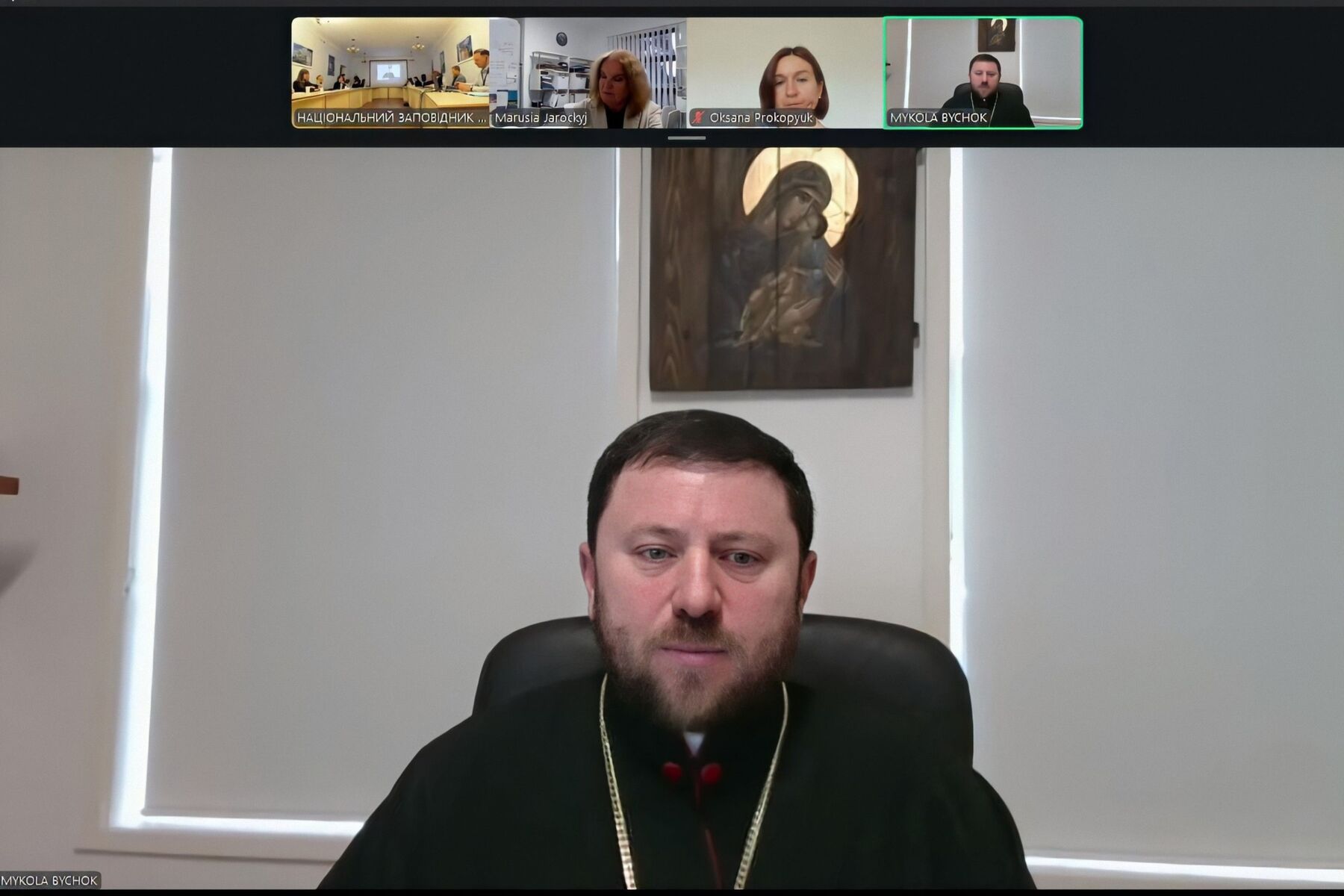
The conference, organised by the Kyiv-Pechersk Lavra National Reserve, was dedicated to the 975th anniversary of the Lavra and the 100th anniversary of the Lavra National Reserve. The event brought together scholars, researchers, representatives of Church communities, and cultural institutions to explore the relationship between the Church, science, and society in the contemporary world.
In his address, Cardinal Mykola emphasised the importance of cooperation between the Church, science, and society, particularly at a time when Ukraine is facing significant challenges. The Bishop stressed that these three spheres are not separate realities but are called to work together in service of the human person, human dignity, and the future. He also noted that openness to encounter, mutual respect, and a responsible search for truth are essential if society is to respond effectively to the challenges of our time.
Cardinal Mykola devoted particular attention to the figures of the Righteous Metropolitan Andrey Sheptytsky and Patriarch Josyf Slipyj, both of whom combined deep faith with a profound appreciation for education, scholarship, and the intellectual development of the Ukrainian people. He also highlighted the significant contribution of the Ukrainian Greek Catholic Church and its clergy to the development of education, culture, scholarship, and national consciousness. “The Ukrainian Greek Catholic Church has, for many centuries, been not only a place of prayer but also a centre of education, culture, scholarship, and national development. Many distinguished Ukrainian scholars, writers, historians, community leaders, and artists came from priestly families. Our priests were often the first teachers, educators, and guardians of national memory within their communities. Among them, it is worth mentioning Fr Mykhailo Verbytsky, who composed the music for the National Anthem of Ukraine, as well as the members of the Ruthenian Triad — Fr Markiyan Shashkevych, Fr Ivan Vahylevych, and Fr Yakiv Holovatsky — who were among the leading figures of the Ukrainian national awakening. Similarly, in the history of our Church in Australia, the founder of the Ukrainian Museum was also a priest. For many years, Fr Zenon Chorkawyj devoted himself to collecting exhibits for the museum and preserving Ukrainian spiritual, cultural, and historical heritage far from his homeland. His work stands as a fine example of how priestly ministry can be combined with cultural, academic, and educational service for the good of both the Church and the people.”
Concluding his address, Cardinal Mykola wished the conference participants fruitful work, new knowledge, enriching encounters, and meaningful discussions. He expressed his hope that the conference would provide an opportunity not only for academic exchange, but also for a deeper appreciation of our shared responsibility for the future of Ukraine.