 Ukrainian Catholic ChurchAustralia, New Zealand and Oceania
Australian Catholic bishops continue to support Ukraine
November 11, 2023
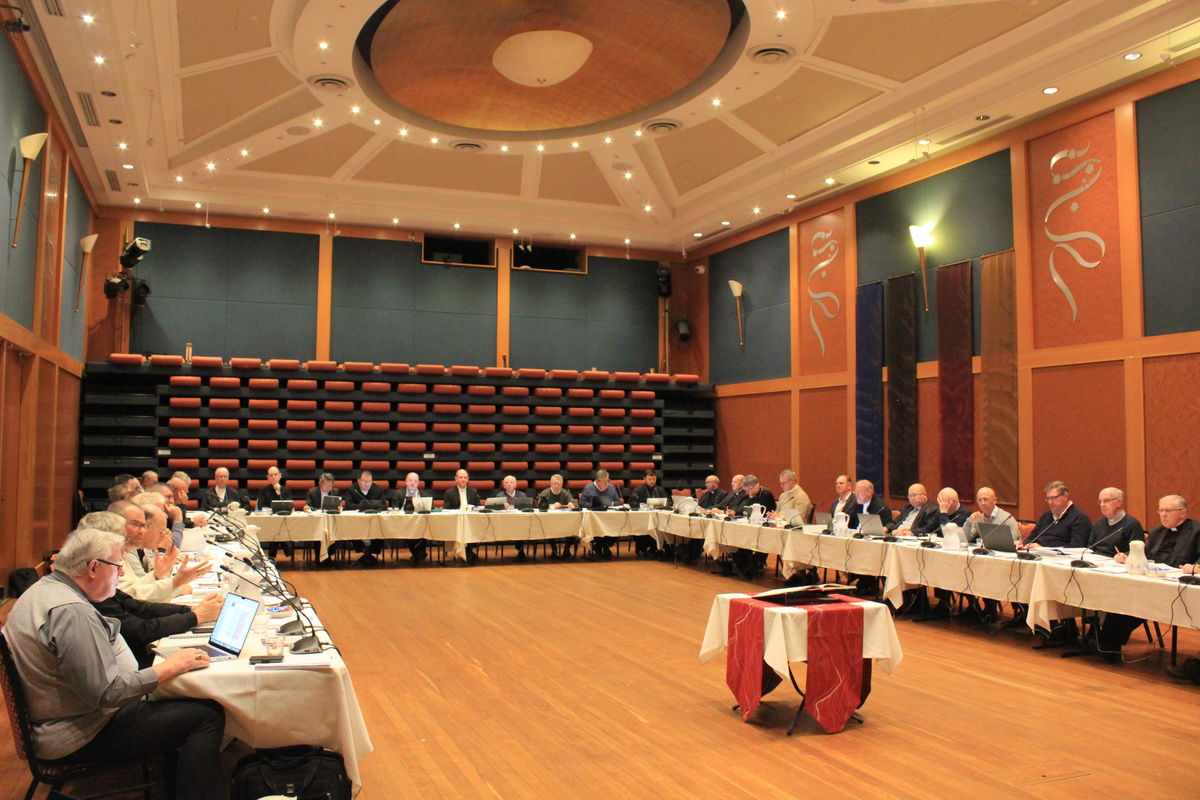
These days, from November 6 to 10, the Plenary meeting of the Australian Conference of Catholic Bishops was held in Sydney. Such meetings take place twice a year, in May and November, and all Catholic hierarchs of Australia participate in them, and once again, Bishop Mykola Bychok, Eparch of Melbourne, was a participant.

An important event of the first day was a meeting with the Secretary for Relations with States within the Holy See’s Secretariat of State Archbishop Paul Gallagher. In his speech to the Catholic bishops of Australia, the representative of the Vatican drew the attention of those present that today it is very important to be in solidarity with those who are suffering, and he also mentioned Ukraine. He emphasised three main features that should characterise the modern Church. First of all, it must be a Church open to all, especially to those who are wounded and keep away from it. It must also be a Church of healing—a Church that must heal the wounds of the past and the wounds that are the consequences of today’s terrible events in different parts of the world. And in the end, it must be a Church of hope, because we all need hope and mercy, and therefore we must not lose hope and support those who are suffering.
After that, Bishop Mykola Bychok took the floor and thanked Archbishop Paul for all the good that he, as a representative of the Vatican, does for Ukraine, and especially for his last speech in support of Ukraine, which he delivered at the UN meeting at the end of September.
The President of the Australian Conference of Catholic Bishops, Archbishop Timothy Costello, also mentioned Ukraine during his speech. He spoke about the visit of a delegation of Australian bishops to Ukraine in August of this year and emphasised that for the Australian Catholic bishops, this visit was a sign of solidarity with those who are suffering and also a sign of pastoral closeness to Christians in the war-torn country.
On Thursday, November 9, Bishop Mykola addressed the meeting participants with a speech. As a topic for his speech, he chose one of the most tragic pages in the history of Ukraine—the Holodomor of 1932–33, the 90th anniversary of which we are commemorating this year. “The Ukrainian people experienced the greatest genocide in its history, namely the extermination of a significant part of the population in terms of number and importance. Holodomor is not just a painful wound. It is a black hole in our history that could irreversibly swallow not only Ukraine, but also any hope for life,” said Bishop Mykola. He also emphasised that this tragedy affected every family in Ukraine, and millions of our compatriots, tortured by the famine, are not just victims of the injustice of the regime; they are victims of the purposeful extermination of the bearers of Ukrainian tradition, culture, and spiritual values. Therefore, as Vladyka emphasized: “Recognizing the Holodomor as genocide is, first of all, establishing the truth, historical and legal justice, recognizing and condemning at the world level the fact that the Russian communist totalitarian regime purposefully committed the greatest crime — the genocide of the Ukrainian nation. And the whole world should know and understand the criminal essence of Moscow, which it tries to cover up with falsification of history and various political lies.” Bishop Mykola called on those present to join in the prayerful memory for the victims of the Holodomor in Ukraine on the fourth Saturday of November, as this day is dedicated to the memory of the victims of this Genocide.
At the end of his speech, Bishop Mykola, on behalf of the Ukrainian Catholic Church, thanked the Australian Conference of Catholic Bishops for the fraternal visit to Ukraine of three bishops from Australia, as well as for the generous donations of the Catholic dioceses of Australia for humanitarian aid to Ukrainians, which were sent to the Patriarchal Foundation “Wise Cause”. He asked the Catholic hierarchs to continue good works for humanitarian aid to Ukrainians and not to stop praying for Ukraine. At the end of his speech, Bishop Mykola presented each bishop with an English-language edition of Peter Kardash’s book about the Holodomor of 1932–33, “Genocide in Ukraine”.
The participation of Bishop Mykola in such meetings is extremely important, not only for the Ukrainian Catholic Church in Australia but also for Ukraine in general. It is an opportunity to be among your own people and maintain contact with the large family of the Catholic Church. On the other hand, it is an opportunity to spread the truth about the events in Ukraine, share the pain and experiences of our people, and find support.